Managing a commercial job site or business location is a juggling act. You have vendors coming in, employees going out, and likely a mountain of waste that needs to go somewhere. That somewhere is usually a massive steel container. But figuring out where to drop that container is rarely as simple as pointing to an empty spot in the parking lot and walking away.
Let’s start by breaking down the most effective roll-off dumpster placement tips for commercial sites. Proper planning here will help your operations run smoothly and keep headaches to a minimum.
Room for the Truck
Most people focus solely on the dumpster’s footprint. That is a mistake. You actually need to plan for the massive truck that delivers and retrieves it. These vehicles are long, heavy, and have a wide turning radius. If you plan for the dumpster to be situated in a tight corner, the driver might not be able to position the hook mechanism to lift it.
You generally need about sixty feet of straight-line clearance for the truck to back up and safely unload the dumpster. The driver needs to align the truck perfectly with the bin to pull it onto the bed.
Watch the Overhead Space
It isn’t just about the ground level. When the roll-off truck lifts the dumpster, the hydraulic rails rise, so you need roughly 25 feet of vertical clearance. Before you finalize a spot, look up. You need to check for low-hanging power lines, telephone wires, or tree branches.
If a driver clips a power line, you are looking at a massive safety hazard and a potential power outage for your block.
Protecting Your Pavement
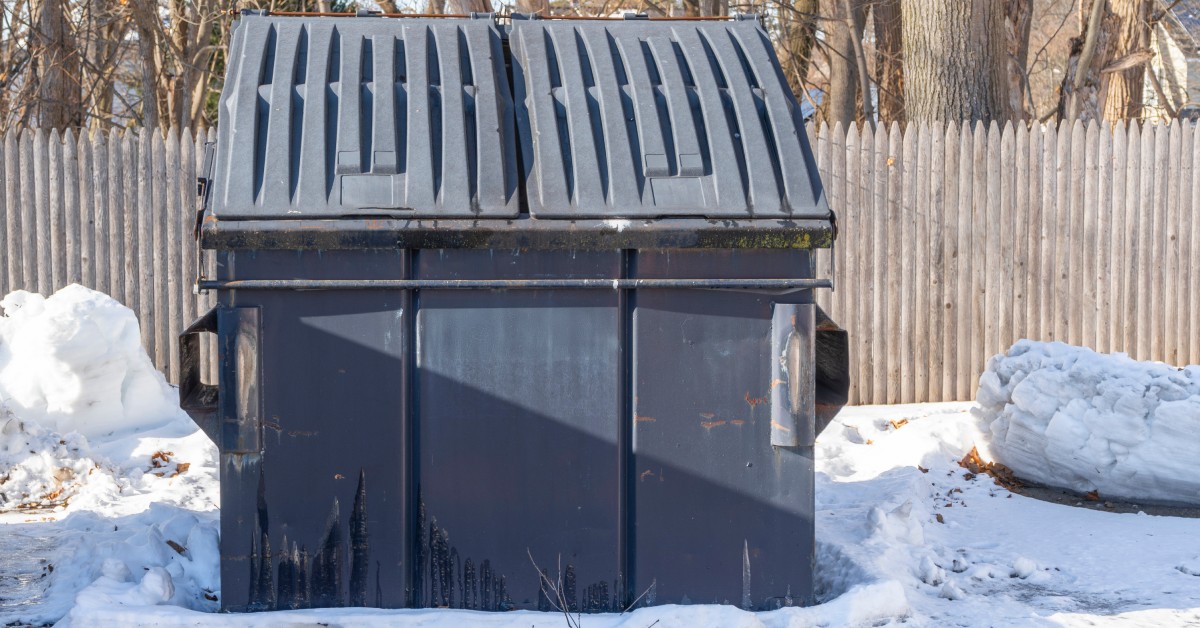
A 30-yard dumpster full of construction debris or wet commercial waste is incredibly heavy: tons of pressure focused on four steel wheels or rails. If you place that directly onto a hot asphalt parking lot in the middle of July, that metal is going to sink. It will leave deep divots or tears in the asphalt that collect water and eventually turn into potholes.
Concrete pads are always the preferred option because they handle concentrated weight much better than asphalt. If concrete isn’t an option and you have to use asphalt, you need to create a buffer. Lay down thick plywood or sturdy wooden planks under the contact points to distribute the weight.
The Problem With Soft Ground
You might be tempted to just have the dumpster dropped on a patch of dirt or grass to save parking space. That is usually a bad idea, as rain changes everything. A loaded dumpster will sink into wet soil like a stone.
When the truck comes to pick it up, the truck’s added weight and the suction of the mud can make retrieval impossible without heavy tow equipment. Stick to hard, paved surfaces whenever possible.
Workflow and Accessibility
You want the dumpster to be convenient, but not too close to the front of the building. If you place it right next to the main building entrance, it encourages employees to use it, which is a good thing. But it also puts a giant trash can front and center for every client or customer who walks in. It smells, it looks bad, and it attracts pests right to your front door.
A better approach is to place the unit near a side door or a dedicated loading dock area. This keeps the waste stream separate from the customer stream.
Don’t Block the Flow
Think about how other vehicles move through your lot. Placing a dumpster in a way that narrows a driving lane creates a bottleneck. Delivery trucks, mail carriers, and emergency vehicles need to navigate your lot without having to make a three-point turn.
You also need to make sure the dumpster doesn’t block access to essential utility equipment. If a technician needs to get to an electrical transformer, a grease trap, or an HVAC unit, and there is a 20-foot dumpster in the way, they can’t do their job.
Legal and Safety Requirements
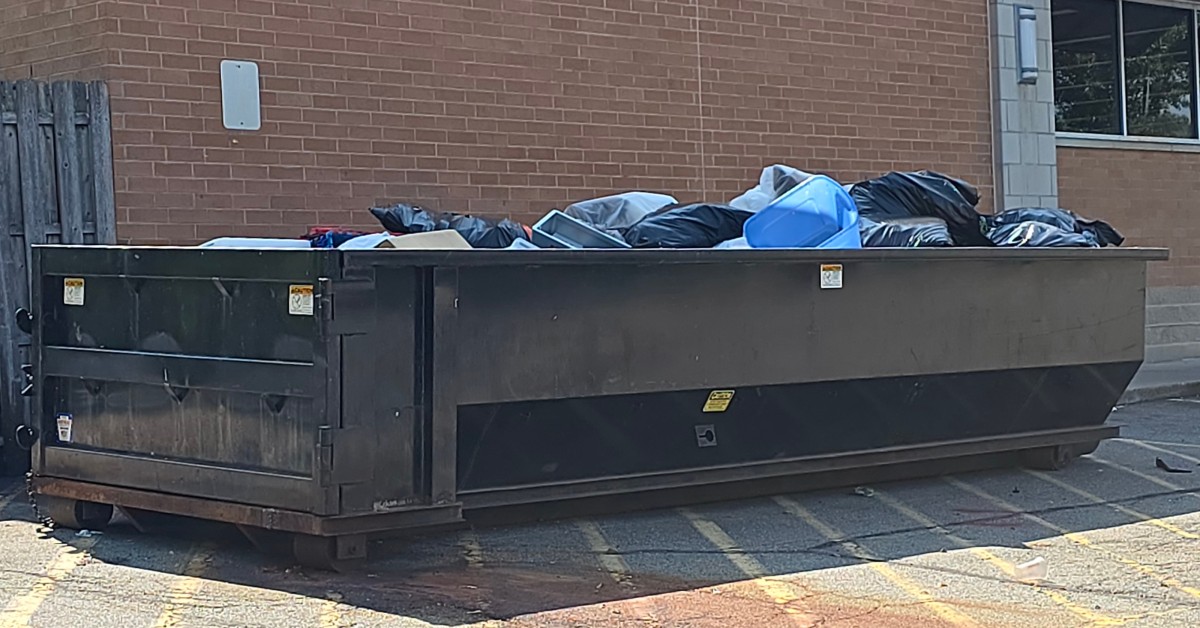
You absolutely cannot place a roll-off dumpster in a marked fire lane, even “just for a few days.” Fire marshals take this incredibly seriously because it risks lives. If there is an emergency and a fire truck can’t get through because of your waste container, the consequences are severe. You will face heavy fines, and the city will force you to move the unit immediately.
Similarly, you must keep the dumpster away from building exits. In the event of an evacuation, people need a clear path to safety. A dumpster blocking a rear exit door is dangerous and a major code violation.
Dealing With Neighbors and Public Property
If your commercial site is tight on space, you might consider the street as a potential drop-off zone. This gets complicated. Most cities require a permit to place a dumpster on a public street or right-of-way. The permit process takes time, and you usually have to put up safety cones or reflective tape to warn drivers at night.
Even if you are on your own property, be mindful of your neighbors. Placing a dumpster right up against the property line of a neighboring business or residential area can cause conflict.
Security Considerations
An open dumpster is an open invitation. You pay for the rental and the hauling fees, so you should be the only one to complete it. Unfortunately, illegal dumping is common. You might come in on a Monday morning to find your dumpster filled with someone else’s old mattresses or tires.
Placement plays a role here. If you put the dumpster in a dark, secluded corner of the lot, it is easier for illegal dumpers to use it without being seen. Placing it in a well-lit area or within view of security cameras acts as a deterrent. If illegal dumping becomes a persistent issue, you might need a chain with a lock, a unit with a locking lid, or a fenced enclosure around the dumpster pad.
Final Thoughts on Placement
Taking 20 minutes to walk your site and plan the drop zone saves you hours of frustration later. You need to balance the hauler’s needs, your site’s safety, and your crew’s convenience. It is a puzzle, but one you can solve with a little foresight.
When you get the logistics right, waste management becomes invisible. The trash disappears, the site stays clean, and nobody complains. That is the goal! Review these roll-off dumpster placement tips for commercial sites before your next rental arrives, and you will avoid the common pitfalls that trip up so many business owners.
Looking for dumpsters for rent? Now that you know exactly where to place your roll-off dumpster, it’s time to order one. CR Dumpstars offers reliable, convenient service with a range of sizes to suit any commercial site. Contact us today to get a quote and schedule your delivery!
Leave a Reply